
2003
Groningen, February 7 2003
Van der Waerden Centennial Celebration
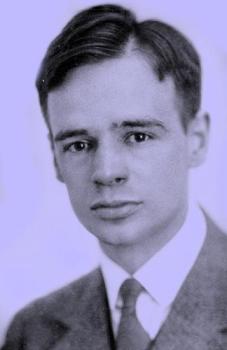
B.L. van der Waerden (2 February 1903 - 12 January 1996) got his PhD degree at the university of Amsterdam in 1926 supervised by Hk. de Vries. He was a geometry professor at the university of Groningen from 1928 until 1931 and after that at the university of Leipzig. From 1948 till 1951 he was professor of pure and applied mathematics at the university of Amsterdam. After this he accepted a chair at the university of Zürich where he remained for the rest of his life.
On Friday, February 7th, 2003, the Dutch mathematical community honours B.L. van der Waerden with a day of lectures in the Academiegebouw of the Rijksuniversiteit Groningen. The building is located at Broerstraat 5 [map], which can be reached by taking bus 3 or 11 from the Centraal Station to the Grote Markt, or by a 10 minute walk.

| 
| ||||||||||||||||||||
If you are interested in joining the speakers for dinner please use our online registration form. The dinner will most likely take place in the Mexican restaurant Four Roses and will cost about 30 euros.
| February 21 | Leiden, room 407 |
| 11:30-12:30 | Peter Stevenhagen, Principal moduli and class fields |
| 13:30-14:20 | Francesco Pappalardi, Average Lang-Trotter Conjecture for inerts in imaginary quadratic fields |
| 14:30-15:20 | Ariane Mezard, Deformations of wildly ramified covers |
| 15:30-16:20 | Jasper Scholten, Restriction of scalars and the discrete logarithm problem on elliptic curves |
| March 7 | Utrecht, room K11 |
| 11:40-12:30 | Frits Beukers, Integral points on curves. |
| 13:30-14:20 | Adriaan Herremans, Arithmetic with modular symbols II |
| 14:30-15:20 | Bas Edixhoven, Two-dimensional Galois representations, Hecke algebras and mod p parabolic cohomology |
| 15:30-16:20 | Gabor Wiese, Computations of weight 1 modular forms over finite fields |
| April 11 | Leiden, room 412. Local organiser: Bas Edixhoven |
| 11:30-12:30 |
Bas Edixhoven (Leiden),
On the computation of the field of definition of torsion points on
jacobians.
Abstract: I will explain a strategy for efficiently computing the field of definition of a torsion point of the jacobian variety of a curve over a number field. An interesting (and motivating) example is the l-torsion of the jacobian of the modular curve X_1(l), in which there is a two-dimensional Z/lZ-subspace that gives the mod l Galois representation associated to the modular form Delta. The strategy depends on a height estimate that still needs to be worked out. I will show how such a height estimate is proved in the function field case. |
| 13:30-14:30 |
Layla Pharamond (Paris),
The real geometry of dessins d'enfants
Abstract: The aim of this talk is first to give a general idea of what is a dessin d'enfant according to Grothendieck and then to describe what I call the real geometry of such a dessin d'enfant, i.e., the algebraic structure of the preimage of the real projective line under the covering associated to the dessin d'enfant in terms of its combinatorial data. |
| 14:45-15:45 |
Stefan Wewers (Bonn),
Three point covers with bad reduction and p-adic uniformization
Abstract: We study three point covers f:Y-->P^1 of the projective line (i.e. dessins d'enfants) with bad reduction to characteristic p. For instance, we prove: Thm: If p strictly divides the order of the monodromy group of f then the field of moduli of f is at most tamely ramified at p. The proof of this theorem relies on an analysis of the stable reduction of f. I will try to explain the idea of the proof and to relate it to p-adic uniformization of hyperbolically ordinary curves, introduced by Mochizuki. |
| 16:00-17:00 |
Irene Bouw (Essen),
Reduction of modular curves
(joint work with Stefan Wewers)
Abstract: In this talk I give a new proof of the stable reduction of the modular curve X(p) to characteristic p, due to Deligne and Rapoport. The proof does not use the fact that modular curves are moduli spaces, but instead uses Raynaud's results on the stable reduction of Galois covers of curves. More generally, one obtains an explicit formula for the number of PSL_2(p)-Galois covers of the projective lines branched at three points which have bad reduction to characteristic p. |
| May 16 | Groningen, room RC255 |
| 11:30-12:30 | Robert Carls, A generalized arithmetic geometric mean |
| 13:30-14:30 |
Lenny Taelman,
Dieudonne determinants over skew polynomial rings
[abstract+paper ] |
| 14:45-15:45 | Marius van der Put, Drinfeld modules and Krichever modules |
| 16:00-16:45 | Jaap Top, Dynamical systems and binary digits of pi, after Bailey and Crandall [PDF] |
| 16:45 | Borrel |
| June 6 |
Nijmegen, collegezaal N7 (=room N1004), on the first floor of the N1
wing
Route description: From the station Nijmegen Heyendaal, cross the big street (Heyendaalse weg) as soon as possible. Now go right towards the university, but as soon as there is a door in the barrier on your left, go through this door. Now follow the main road (at the beginning perpendicular to the Heyendaalse weg) until you reach the back of the main faculty building. Enter the building, turn left and follow the corridor until you reach the three elevators. Now go one floor up. Lecture hall N7 is in the corridor on your left. Due to construction parking is limited. See map. |
| 13:45-14:30 |
Reinier Bröker (Leiden),
How to construct an elliptic curve with exactly 261424513284460 (=[pi^29]) points
Abstract. One way to construct an elliptic curve with a given number N of points is to simply look for a prime p near N and write down curves over F_p until you've found one with N points. This idea is perfectly sound, but rather unattractive from a computational point of view. Another approach proceeds by computing a minimal polynomial for the Hilbert class field of an imaginary quadratic field of the `right' discriminant. A popular means of doing this is by approximating values of the j-function that occur as the roots of the polynomial and compute the polynomial from this data. If one tries to do this complex analytically, one runs into the problem of rounding errors. This leads to the question whether the same computation can be done p-adically. In this talk I will first briefly recall how the complex analytic approach works and then I will describe an algorithm that works p-adically. |
| 14:45-15:30 | Henk Barendregt (Nijmegen), The challenge of computer mathematics |
| 16:00-16:45 | Freek Wiedijk (Nijmegen),
John Harrison's formalization of the Agrawal-Kayal-Saxena primality
test
Abstract. This talk will present work of John Harrison, as a showcase of what formalization of elementary number theory can look like. The work that will be shown is a formalization in the HOL Light system of the proof of theorem 2.3 from Bernstein's "proving primality after Agrawal-Kayal-Saxena". The talk will explain the foundations of HOL Light, then it will present various examples of how mathematical notions can be defined inside this system, and finally it will show the AKS formalization, discussing one of the files in some detail and then focusing within this file on one of its lemmas. |

Fall 2003
| September 12 | Leiden, room 412 |
| 12:10-13:00 | Tommy Bülow, The Negative Pell Equation and Relative Norms of Units |
| 14:00-14:50 | Jeanine Daems, A cyclotomic proof of Catalan's conjecture |
| 15:00-15:50 | Bas Jansen, Mersenne primes and Woltman's question |
| 16:00-16:50 | Joe Buhler, Polynomials over local fields |
| September 22 - October 2 | EIDMA-Stieltjes Onderwijsweek, followed by workshop Mathematics of Cryptology at the Lorentz Center in Leiden. |
| October 17 | Nijmegen, Room N4 (N3045). On the current map of campus the talks are in building N2, but you can only enter the building in N1. |
| 13:10-14:00 | Wieb Bosma, On primes h*3k+1, reciprocity, and residue covers |
| 14:10-15:00 | Orsola Tommasi, The rational cohomology of the moduli space of genus 4 curves |
| 15:30-16:20 | Willem Jan Palenstijn, Galois groups of radical extensions of fields |
| 16:30-17:20 | Bart de Smit, Artin Schreier theory of ramification groups |

| October 31 | Groningen, room RC 255. |
| 11:30-12:20 | M. Reversat, Relations between modular forms and automorphic forms in positive characteristic |
| 12:20-12:50 | Lunch |
| 12:50-13:40 | J. Van Geel, Density theorems for polynomials over finite fields (after B. Poonen) |
| 13:50-14:40 | G. Böckle, Uniformization of Anderson t-modules |
| 15:45-16:00 | Gert-Jan van der Heiden, lekenpraatje |
| 16:00- | PhD thesis defense of Gert-Jan van der Heiden |
| November 14 | Universiteit van Amsterdam, the first talk in room P.227, the others in P.018. |
| 11:30-12:30 |
Karim Belabas,
On the 3-rank of Q(p1/2)
Abstract: The main result of this talk is the following statement: there exists a positive density of primes p, such that the ideal class group of the real quadratic field Q(p1/2) has no elements of order 3. Since class groups of such fields have no 2-torsion either, this is a weak version of Gauss's conjecture stating that infinitely many of these fields have class number one. The result is obtained by combining sieve methods with the theory of Delone, Faddeev, Davenport and Heilbronn, which parametrizes cubic orders by classes of integral binary cubic forms modulo GL(2,Z). |
| 12:30-13:30 | Lunch |
| 13:30-14:30 |
Hendrik Lenstra,
What is the logarithmic class group?
Abstract: The logarithmic class group can be viewed as a Galois-theoretic analogue for number fields of the group of rational points on the Jacobian of a curve over a finite field. The present lecture, which is of a tutorial nature, will provide an easily comprehensible definition of the logarithmic class group of a number field, as well as an "internal" description that can be used for computational purposes. |
| 14:45-15:45 |
Frans Oort,
Special points on Shimura varieties, an introduction
Abstract: We formulate the André-Oort conjecture for the moduli space of abelian varieties, we discuss the analogy with the Manin-Mumford conjecture, the connection with a conjecture by Coleman, and we describe a series of examples. Notes [PS] are available from the speaker. |
| 16:00-17:00 | Ben Moonen, Introduction to Shimura varieties, I: Mumford-Tate groups |
| November 28 | Universiteit Leiden, room 413. |
| 11:30-12:30 |
Karma Dajani,
From A. Oppenheim to M. Ratner via flows on homogeneous spaces
Abstract: It is often profitable to reformulate and generalize a conjecture from one field in mathematics to another field. An example of this is given by the Oppenheim's conjecture in number theory which was generalized by Raghunathan in the 1980's to a conjecture on orbit closures of unipotent actions on homogeneous spaces. The conjecture lead to several new conjectures, which were all proved by Marina Ratner in the 1990's. In this talk we will outline this historical path, and explain the underlying ergodic theory of flows on homogeneous spaces. |
| 12:30-13:30 | Lunch |
| 13:30-14:30 | Ben Moonen, Introduction to Shimura varieties, II: Variation of Hodge structures |
| 14:45-15:45 | Christiaan van de Woestijne Solving equations over finite fields |
| 16:00-17:00 |
Johan Bosman,
Mahler's measure and special values of L-functions.
Abstract: If P is a polynomial in several variables, then we define its (logarithmic) Mahler measure m(P) as the logarithm of the geometric mean of |P| over the n-torus Tn, where T is the unit circle in the complex plane. David Boyd did a numerical investigation to several families of polynomials in 2 variables and he discovered that m(P) appears very often to be a rational multiple of a special value of an L-series of either an elliptic curve or a Dirichlet character. In this talk we will examine a family of polynomials whose zero locus is generically a curve of genus 2 and give a proof of some identities that Boyd conjectured. |
The first two talks form the second of three preparatory sessions for the workshop Special Points in Shimura Varieties, which will take place at the Lorentz Center in Leiden in the period december 15-19.
| December 12 |
Morning program:
EIDMA-CWI Workshop
on Factoring Large Numbers at
La Vie
with lectures by Arjen Lenstra and by Willi Geiselmann
and Rainer Steinwandt. To attend the morning program, please notify
Herman te Riele by email at herman@cwi.nl.
Afternoon program: Universiteit Utrecht, Minnaertgebouw room 211. |
| 14:30-15:30 | Ben Moonen, Introduction to Shimura varieties, III: Basic properties of Shimura varieties |
| 16:00-17:00 | Bas Edixhoven Galois action on special points |
The last two talks form the third and last preparatory session for the workshop Special Points in Shimura Varieties, which will take place at the Lorentz Center in Leiden in the period december 15-19.